Cogito Ergo Sum Art Print, minimalist typography, black and cream decor, home office or library, philosophy gift
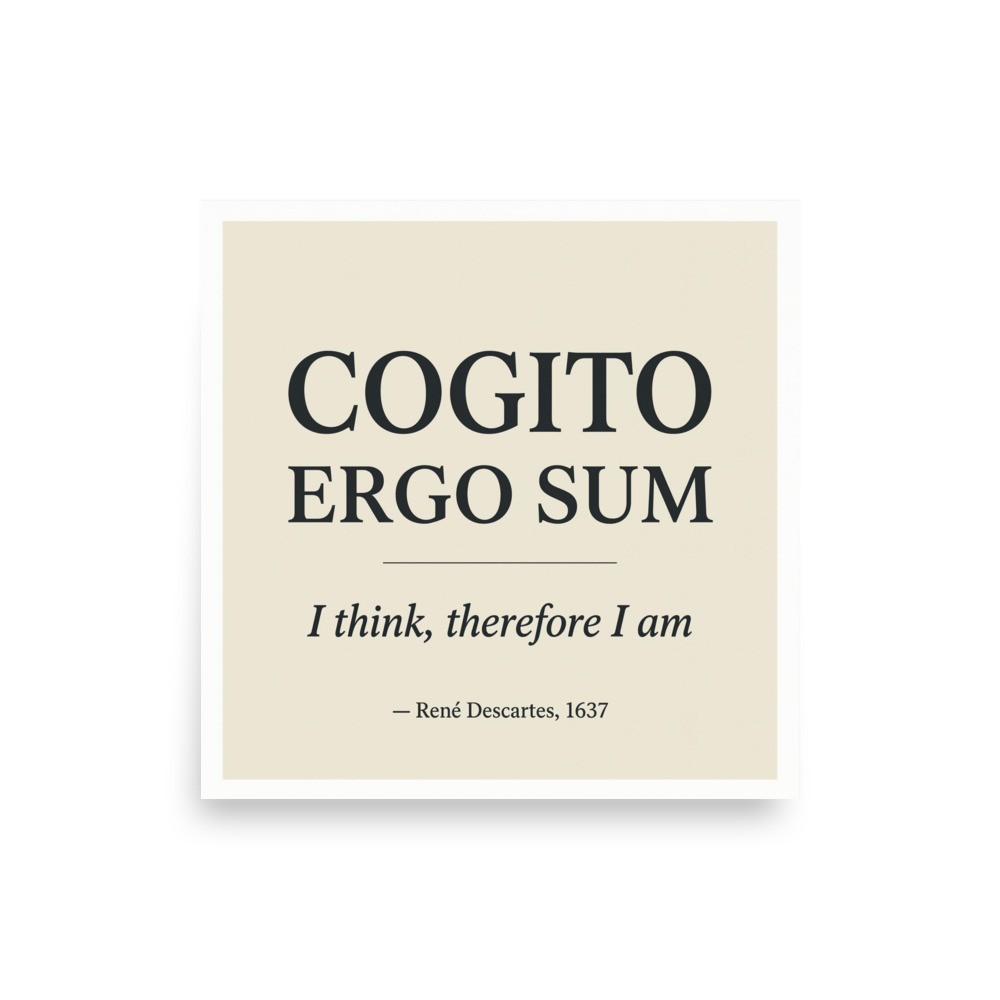
The “Cogito Ergo Sum” art print presents René Descartes’ classic “I think, therefore I am” in a clean minimalist typographic layout. Digitally printed on enhanced matte paper (189 g/m²), its black-on-cream palette suits a home office, study, or library and makes a thoughtful gift for philosophy readers and intellectually curious friends.
The eye meets a quiet field of cream, interrupted by crisp black lettering arranged with deliberate restraint. The composition gives the words room to stand on their own: short lines, even spacing, and a clear contrast between the dark characters and the warm background. There are no decorative illustrations competing for attention, only the measured shapes of the type and the open space around them. The line quality feels precise rather than mechanical, with the printed edges defining each letter cleanly while the matte surface keeps the black from becoming glossy or harsh. The result has the visual rhythm of a page designed for close reading, but the scale and simplicity allow it to work as a composed wall piece. Its restrained palette sits naturally beside black frames, cream textiles, oak shelving, charcoal upholstery, or a desk with dark metal details. The Latin wording adds a formal, thoughtful presence without requiring a crowded visual treatment.
This approach belongs to the modernist tradition of graphic design, particularly the 20th-century movement toward functional typography and reduced visual language. One concrete marker of that tradition is the use of typography as the main image: meaning is carried by the arrangement, proportion, and spacing of the words instead of by ornament or illustration. The print also reflects the influence of philosophical and literary ephemera, where a concise statement is given enough space to invite contemplation. Its design does not imitate an antique manuscript or a richly decorated academic bookplate; it translates an old philosophical proposition into a contemporary visual form. That balance makes it suitable for a room where reading, writing, and focused work already have a place. In a home office, it can sit above a desk as a compact reminder to pause before reacting. In a study or library, it can join shelves of philosophy, essays, and history without looking tied to one particular era of furniture or architecture. It also offers a considered gift for someone drawn to ideas, classical thought, or language presented with visual economy.
On the wall, this print wants a setting with enough surrounding space for its open composition to remain legible. Hang it above a writing desk, beside a bookcase, or on a narrow wall near a reading chair. A thin black frame will reinforce the contrast and give the typography a defined edge; a pale wood frame will soften the black-and-cream pairing and connect it with oak, birch, or other light timber. It works well against white, ivory, warm grey, muted sage, deep navy, or a softly textured plaster wall. In bright daylight, place it where indirect light can reveal the cream ground without creating reflections across the surface. Near a desk lamp or wall sconce, use a warm bulb so the background remains inviting rather than stark. Lower light will make the black lettering recede into a calmer, more contemplative arrangement, while morning or afternoon light will emphasize the clarity of the spacing. The enhanced matte paper supports that subdued character, keeping the piece visually quiet in a room designed for thought.
| Material | Enhanced Matte Paper (189 g/m²) |
| Digital printing | |
| Care | Frame or mount out of direct sunlight; wipe gently with a dry, soft cloth. |
| Shipping | Made to order — ships in 2–5 business days |